Here you can find Solar Panels and technological accessories related to Solar Energy: Click Here If you want to learn about Solar...
Here you can find Solar Panels and technological accessories related to Solar Energy: Click Here
If you want to learn about Solar Panels, to advise you before buying or to build your own Solar Panel: Click Here
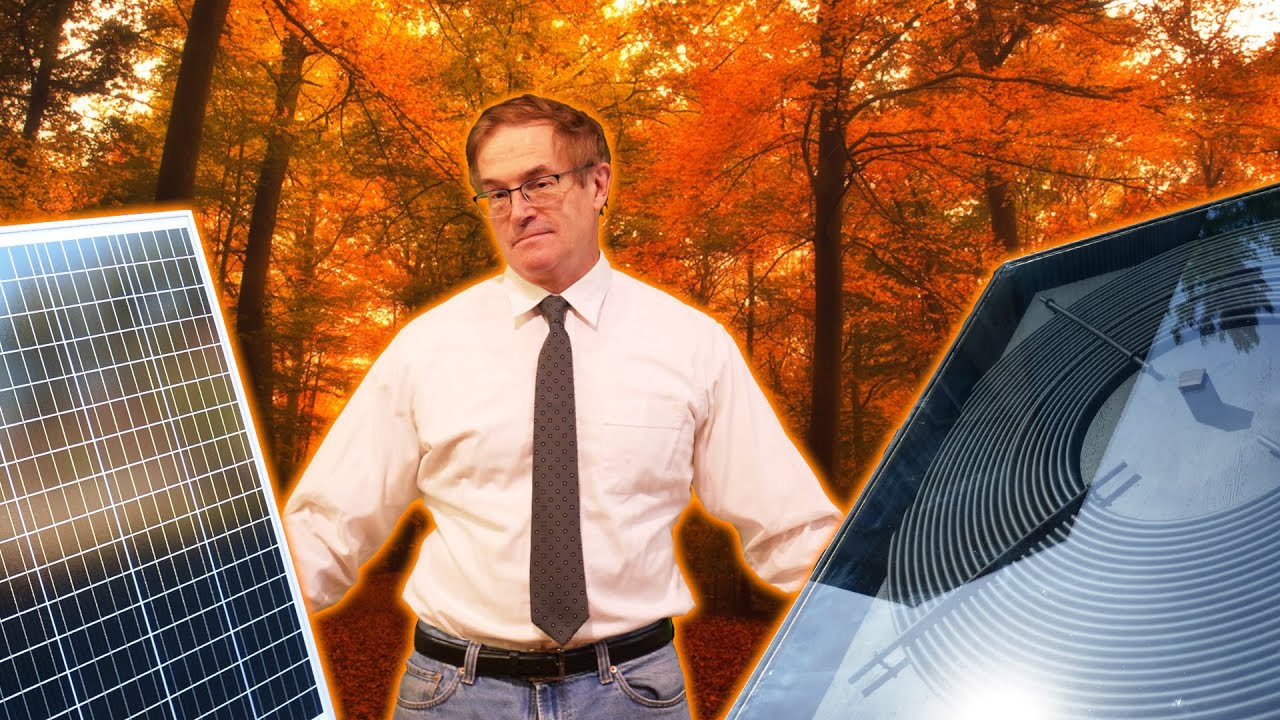
today we're going to do an interesting test we're going to compare the solar energy harvesting efficiency of a pv or solar cell array against a solar hot water heater [Music] uh and to do this test what i'm using is the same solar water heater that we used last year for our desiccant based refrigerator system or air conditioning system but i have it covered right now so that i don't give it an unfair advantage against the pv array by pre-baking the structure we'll get into that in just a second so let me cover with you the design of the setup get an idea of sort of what we're doing and how we're going to accomplish this test now the two panels i have over here i got them on amazon they're from a company called weiss and they're pretty nice panels each one is 26 and three-quarter by 39 and 3 8 inches in measurement and i have two of them so combined they have a square inches area of about 1950. the 48 by 47.5 square inch solar water heater has a square inches area of about 22.50 so as a result the pv array is working at about a 17 percent disadvantage we'll keep that in mind when we're doing the test but this is the closest i could get to the size of the existing solar heater now each of these panels are rated at 100 watts now we're not in mexico and the equator at noon at 8 000 feet we're in new england in the afternoon so they may not quite reach that rated output but we're going to see as i'll show you now the two panels are wired in series each one is designed to produce its maximum output into a load of 3.5 ohms so by running them in series we're going to produce the maximum output into a load of 7 ohms so the test chamber i have over here is an insulated styrofoam container that has exactly 15 liters of water inside of it in the bottom of the chamber i have a resistor bank that totals seven ohms and in addition to that i have a temperature probe that's held down in the water and a circulating pump that provides a little bit of mixing inside the tank in order to provide a very even level of heating throughout so that we don't have any kind of hot spots in here in addition that pump adds about six watts of frictional heat to the system and balances out the six watts that i use to power the circulator for the solar water heaters so we keep it apples and apples in terms of energy input now the output from the solar arrays is also going to be sent through on its way to that resistor bank through a power meter that will measure both the voltage and the current so we'll see the real-time output from the panels as well as the long-term accumulated energy inside of the bin over here i have a temperature meter down here that measures the temperature in this with the first probe over here t1 and i have the other probe in the other container t2 and you can see that they're pretty close they're about as close as i was able to adjust them but they're within about half a degree of the same temperature right now but if anything this is a little bit warmer so we'll just keep that in mind as as the test progresses about half a degree finally i have a timer and so when we begin the test we'll time it and we'll see what the temperature rise is in each of the two systems now this is the power supply that simply pumps uh drives the pumps and over here i have the container for the solar array or the solar water heater now as i said i kept this covered so that we don't pre-bake it just to make it fair and so what i'm going to do is i'm going to prime this pump because it's completely drained the idea being that we have 15 liters here 15 liters here and so even though this level will drop a little bit as we're pumping the liquid into the system the total thermal mass of the water will be the same between both tests and as a matter of fact the solar water heater will be working at a little bit of a disadvantage because it also has to heat the structure in addition to the water but again it's probably not very much and it just means that the test is going to be extremely fair or if anything biased slightly toward the the solar panels or the pv array so let me get this started and then i'll go through the design of this and the way to get this started is i'm going to prime the pump so i'm going to use this very high tech technique to get this thing primed and we'll get the pump started so let's suck some air through here oh wrong one let's try that one again see if we get some bubbles coming through here all right let's turn on the pumps and get this going this is circulating very nicely as you can see and you'll see the bubbles coming out of the other container as we're beginning to fill up the chamber of the tubing inside of here so let's uncover this let's go ahead and i'm going to turn on the solar power array by connecting this up and we will start the timer now is it reading nicely okay all right circulating still priming two temp probes and we're at 24.8 and 25.3 okay and the top one is the left or right and the left one over here is the bottom one and the top and the one over here on this side is the top one okay now as i said i went through this a little bit in a previous video where we did the desiccant air conditioner system and it's a pretty nice kind of setup because it's easy to build you can make this yourself and a really good video on the step by step assembly is on a channel called desert sun02 and he goes to the real detailed assembly of the system so what i'm going to do here is just give you kind of an overview and some tricks and techniques as well as some of the modifications i made to improve its performance now the system requires that you build a box that's going to contain the hot water tubing that's going to circulate in in the sunlight but because the driver for the cost for this kind of a system is the glass it the glass if you were to custom order it for just this project would bring the cost of this solar water heater above the cost of this close to about two hundred dollars but if you're willing to get scratched pieces or odds and ends from a local glass supplier which we did you can generally get this glass for a much lower price so the first step is to obtain the glass before you build this and design it you design around the glass once you've got the glass and you've determined the dimensions you need to build a box you want the box itself to be as thin as you can just to make it lighter and also reduce the thermal mass but it needs to be at least three times the od of the tubing you're putting inside to be able to manipulate the tubing and not have anything touching the front of the glass surface now the box box can be made out of almost any kind of material you want you can use wood like we did you can use that pvc foam board that i use for so many of my projects it's excellent in terms of insulation capabilities and it's very good in terms of its glue ability screwability machine ability you could also build it out of fiberglass you could use aluminum you could use concrete and something very interesting might be say air crate a nice insulating lightweight version of concrete we'll cover that in a future video in any case once you've built the box which is just four sides on a back panel if you're going to be using wood specifically because the heat inside can bake out some of the humidity it's not a bad idea to put a water impervious layer below the paint epoxy is a great choice there are other kinds of paints available but you don't want that humidity to build up inside of the box when this gets to really high temperatures once you've sealed the wood or you've taken the other box and you've set it up on a stand you then want to put a couple of coats of a non-reflective paint now the paint that i used for this project is frequently used for a lot of solar water heaters it's a rust-oleum flat black enamel costs about four dollars a can at a big box store and it's an excellent material it's pretty flat and it absorbs a lot of light there's a better paint i wish i would have used it and it's the rust-oleum camouflage black it's an ultra flat black and it actually absorbs a little bit more light so i wish i had used it but it's a good option if you decide to build one of these you might want to look at this paint instead of this paint now once you put down a couple of light coats of paint on the inside of the empty box the next step is the tubing the tubing in this system is pex tubing this is a cross-linked polyethylene tubing it's frequently used in commercial and residential hot water systems it's good up to at least 200 degrees fahrenheit or about 95 degrees centigrade it has a life span of about 25 to 50 years it's not very expensive it costs about 25 cents per foot in very large rolls you can get rolls of 100 feet all the way up to a thousand feet the one big difficulty is that the stuff is extremely stiff and springy and the technique that you need to use which desert sun covers in some detail to get this into the box is really important because if you try to do this in any other way and if you try to do this alone you're going to end up in 10 minutes cursing the universe all wrapped up in coils of this tubing it's very very frustrating the technique is to get a couple of buddies to hold the stock coil above the middle of the table and as the coils drop off what you'll do is you'll take an initial length of the tubing and you will jam it out one of the holes that you've cut in the side of your box give yourself a generous amount of extra length and then starting from the outside in you're going to begin wrapping these coils there's almost 200 feet or about 62 meters of this tubing in this particular box and because they come in long lengths there's no joints the chance of leakage is minimal but nevertheless it's a lot of tubing to handle and that's why you want the friends as you feed the tubing around the outer edge of the box the trick that you see on his channel is the use of these little eye bolts and these movable dowel rods that support the tubing after you put an initial outer coil inside of the inside of the box the next step is to take your can of paint you've got gloves on and give it a little bit of a spritz so you can get the back side of this white or sort of a yellowish white tubing so that if things shift around later on you don't expose non-reflective surface so it's just a little spritz around the first coil and then as you proceed in on the diameter you will advance the dowel rods slowly toward the center every 90 degrees as you move around the box and what's nice about that is it keeps it from going spraying after you've got about six or seven of these coils in here when you eventually get to the point that you really can't wrap it any tighter you'll then take another generous length of the tubing cut it off then back up and out the other hole that you've cut in the side of the box to give you an output then at that point you want to take a can of paint and you're going to put down a couple of light coats from different angles you want to make sure you don't shadow because of the fact that everything looks great here and then you look from the other side and everything is unpainted and you're going to move around with very light coats at about 40 centimeters or 16 inches away the lighter the better and the more coats that you use once every five or six minutes the better it's going to be and a good timing uh measurement or a fiduciary to know when it's time to put another coat on is when the gloss the shininess of the solvents evaporation disappears and you get that sort of dull black look now once you've finished doing all that painting put it in a protective area so that the paint can dry to the point that it has no aroma you can't smell any kind of solvent then a little bead of rtv along the outer side of the box and then you drop your very clean piece of glass on top of there a couple of gloves might be nice so you don't end up with fingerprints you can never get off again once you put that down there then you're pretty much done let the rtv dry and then you've you've got yourself a solar panel or solar water heater now the modification that i made in this system that makes it pretty attractive is the fact that the glass that i used is called e-glass this is a metallized glass that works as sort of a dichroic filter a a wavelength filter it is a metal coating that will allow a little bit of the uv all of the visible and a little of the near ir through which represents the bulk of solar heatings most of the solar energy spectrum is in that wavelength range when it hits the inside of the box and it begins to heat up you end up getting thermal radiation that begins to radiate away and so the e-glass actually reflects that back into the box it's a little bit like the greenhouse effect except in this case instead of absorbing the thermal radiation in the co2 or the methane it reflects it back onto the tubing retaining more of the heat inside of the box as the box continues to heat up more and more what you end up with is a hot surface and that's why i put a thin piece of polyurethane foam underneath this and why i added the gasket that i have on the outer edge here and a second pane of very thin glass to maintain the temperature inside it's got nothing to do with wavelength it's just that the glass gets hot enough from the air inside that you're losing energy into the air and this provides sort of a dual pane insulation and provides a little bit more see this is nice and cool provides a little bit more heating inside let me see where we've gotten in terms of the temperature here okay so while i was jaw boning this solar water heater has increased by about five or six degrees and this heater here has in or this solar water heater has increased about four degrees so clearly this is actually absorbing more heat you can also see that we're running at about 26.5 volts at about 3.78 amps so total output probably about 90 watts it's new england it's the afternoon so we're going to allow this to continue to run for a period of time and then once we've reached a point where we've kind of proven our point then i'm going to go ahead and explain to you a little bit about how we might use this in a complete energy harvesting system see in a little bit [Music] [Music] okay so it's been about a half an hour and you can see that the pv array has heated the water about six degrees celsius while the solar water heater has heated the water over 13.5 degrees celsius it's more than double the efficiency of the pv array now i'm not saying that you should throw away all of your pv cells and just get solar hot water heaters i mean that's not the point here the point is that because of the extremely high efficiency in accumulating solar energy in this hot water heater you can use this as a supplement to a pv array or a solar energy system that you may have in your building your business your home because there are certain advantages and disadvantages of either of these systems and they also are complementary to different types of solar or energy harvesting methodologies if you have cloudy weather neither of these are going to work very well and at night they don't work at all wind power and hydroelectric would be great to supplement a system to reduce some of the troughs that you get if you're going to be trying to do a full approach to energy harvesting both of these not only suffer from the fact that they need sunlight but they also use up a fair amount of surface area you need an area around your building that has unobstructed sunlight for large periods of time but with the increased efficiency here you only need about half the area of the solar water heaters the solar panels have the advantage that you obtain electricity and so not only can you heat water but you can also run a toaster an air conditioner and charge your cell phone you can only produce hot water with this but in any kind of application where this power would be used to heat hot water you can unload them with the much more pop much more efficient solar water heaters now there are a couple of other issues regarding using this as opposed to solar panels one is the winter as the temperature drops outside and you get to lower and lower ambient temperatures the difference between the temperature inside the box and outside increases so you're either going to have to add additional cost and insulation to maintain the temperature of the water with a larger differential between the inside of the box and the outside and in addition to that you're also going to have to allow for the fact that the water could freeze now you could add an antifreeze if you use a split system where you're not going to be showering with the water that comes out of this you could split it and run an antifreeze solution through here that would allow you to extend through a larger part of the year if you're in a temperate zone or in areas like a high desert where it gets below freezing at night you might want to add some polyethylene or polypropylene glycol to make this uh more compatible with lower temperatures keep in mind you want to do that judiciously though because both of those antifreeze solutions decrease the heat capacity of the liquid a liter of water will carry more heat out of the solar collector and into the reservoir than will a liter containing antifreeze in addition the antifreeze solutions increase the viscosity of the liquid so it takes a little bit more pumping power to move that same leader out of the solar water heater and into your split cycle heat exchanger but because this is only using six watts to move this water through here adding a couple of more watts is not a big deal and so using an antifreeze solution is not not a bad thing to do now the final thing i want to bring up is the idea of cost as i said if you're willing to do this yourself and you get the glass in a surplus fashion or you're willing to be flexible in terms of the area you can build one of these things for less than one of these solar arrays or these pv arrays but the other thing to keep in mind is what is the real cost the cost of this is what it cost you to build it and a little bit of time the cost of this also should take into account disposal most of the polycrystalline the silicon-based systems are compatible with very simple recycling but some of the thin panels contain cadmium telluride and that is a heavy metal and it can present a real issue in terms of recycling you don't want to put this into landfills and you want to responsibly dispose of these things at the end of their lifespan in addition keep in mind that a lot of the arrays that people have put up in our community and maybe yours as well make economic sense only because of tax subsidies and i think that has to be taken into account because it isn't really a fair idea of what the cost is if you have somebody your neighbor for example financing some of your pv arrays the real cost is actually somewhat higher and if he does the same thing and you're financing his if the system doesn't make sense without the subsidies as a societal cost it probably doesn't make sense with subsidies because you're just transferring money back and forth and it's not really the actual cost of the systems but putting that aside kind of an interesting test and kind of a surprising result i was amazed at how much more efficient these pv arrays of these solar water heaters are than the the pv arrays and if we look right now wow that's getting pretty hot that's pretty amazing so in any case thank you very much for watching hope you found this pretty interesting and we're going to be doing more uh sort of energy systems energy harvesting videos in the future and as the weather gets a little bit colder we're going to try to get a few of those in before we get into the snow and we have to do most of our videos inside so if you have a comment please put it in the comment section below i read them all and i try to answer questions as well as i love the ideas that people give us for potential future videos if you like the kind of content that the channel covers please subscribe because it really helps us out helps us to grow and helps to distribute our videos to a much broader audience in any case enjoy the day take care and we'll see you soon [Music] you ...


No hay comentarios