Here you can find Solar Panels and technological accessories related to Solar Energy: Click Here If you want to learn about Solar...
Here you can find Solar Panels and technological accessories related to Solar Energy: Click Here
If you want to learn about Solar Panels, to advise you before buying or to build your own Solar Panel: Click Here
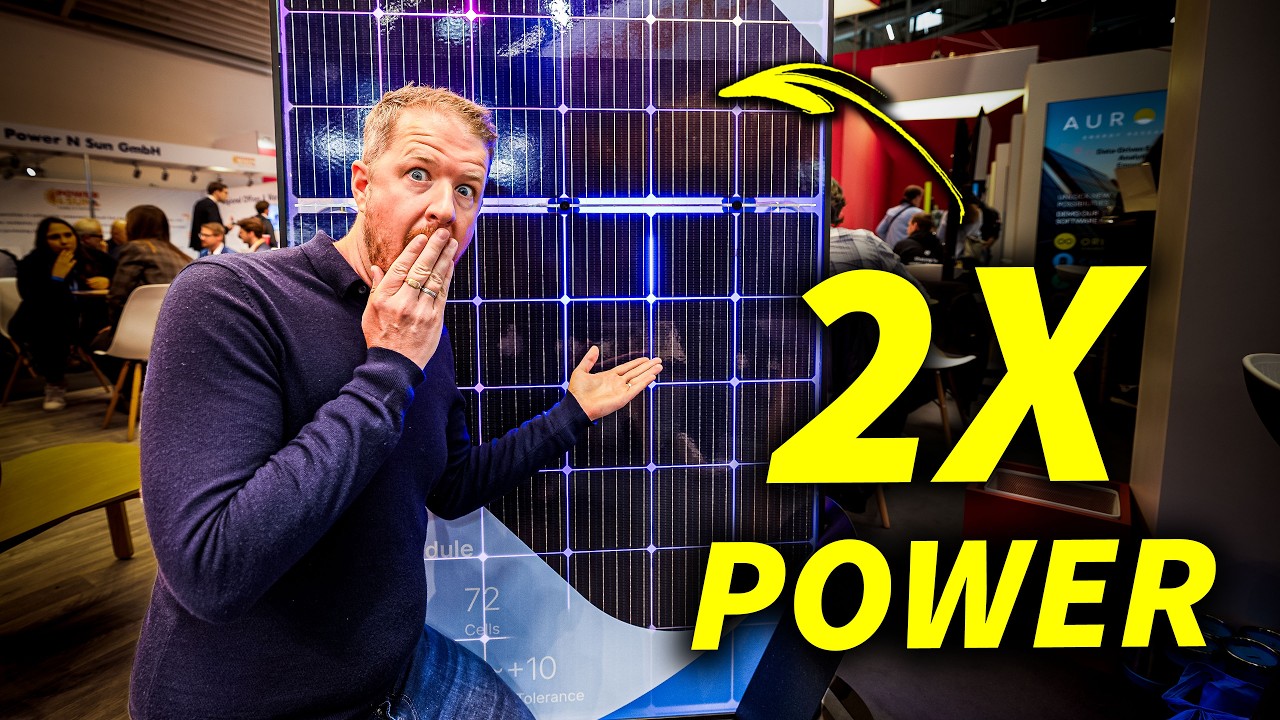
The solar PV industry is about to be changed forever by this new solar cell technology. And in today's video, we're going to do a deep dive and find out what it's all about. So, we're here at Inter Solar in Munich 2025 to meet Oxford PV. You may have heard murmurings on the internet about a certain technology called Perovskite, which is supposed to be a potential gamecher for the solar panel and solar cell industry. YouTubers like Matt Fel and others have posted deep dive videos about this technology, but we're here to see it in the flesh and find out more about how it actually works and how it might change things for solar installers and end users. So, we're here with Dan who's head of product from Oxford PV and we're going to pick his brains about this amazing and innovative product that we've been hearing so much about. So, nice to meet you. It is. Yeah. Yeah. Tell us what is perovsky first of all? Like it says f it's a fancy word but what does it actually mean? Well I I think the word's got all these historical connotations. Basically it was named after a Russian dude who lived in like the 1800s basic and he discovered a mineral which had a certain structure. Turned out 12 or so years ago the guys in the physics lab in Oxford discovered the same crystal structure but with a slightly different arrangement of materials was actually useful for solar energy. And so they didn't have a new new name for it. So they just call it by peroscope which is actually the the way the atoms are arranged in the crystal. That's what gave it its name. Okay. So it's basically a crystal. It's a crystal. And how does this crystal make solar panels better? Well, I think that that was a great discovery that was made about 12 years ago was that this material that no one ever suspected turns out is actually brilliant at absorbing light and turning it into electricity. So uh we we went on a journey from then about 12 years ago to say how how can we actually turn this from something you can do in a lab to something you can do in real life. And so we we spent a lot of time honing that exact material, exact composition and also how to put it down on a big area to make it actually relevant for like everyday use, not just something you have in a lab. So okay. Uh yeah, here we are with with the the fruit of uh you know 12 years of work. There's something to actually look at and use in the real world from a lab in the depths of Oxford University to here in Munich with a real product. Quite a journey indeed. Yeah, it's been fun. This is our subscriber renewable energy village. And if you'd like to be a part of this lovely little village, all you have to do is one thing which really helps our channel. Hit that subscribe button. I've noticed that 75% of you who watch our videos regularly haven't yet subscribed. We'd really appreciate it if you hit the subscribe button and become part of our lovely subscriber village. So, how would you explain it in really simple terms as to like what Brokai does to the the solar cells? Almost all solar cells um are based on silicon. And what silicon does brilliantly is it it captures light across all different colors of light. So whether it's like UV light, really blue or really infrared light, it gets it all and it uses it and turns it into electricity. Okay. What proskite does differently is that it can take the high energy light to the the blue light, the green light, the visible light that we see and convert it more effectively into electricity. So what we do then is we we get a regular silicon cell like this which is what you can see the outline of and we build on top of that directly really thin layers which build up the perovskite cell and so that perovsky cell then gets all that high energy light and makes the most of it and then it also lets some light pass through the silicon which correct collects the rest of the light and that you get basically a double junction which is why we call it a tandem solar cell. It's two solar cells acting as one to really get make the most use of the light spectrum that's available. Amazing. Yeah. And what's the real world impact for you know solar installations? The real world impact is at the end of the day you get more energy out of a given area. So our product is uh this is our first generation product. It's been released last year. It's already been sold into some markets in the US. Uh we're releasing a second generation product this year which will have uh more efficiency. And I think it it's it's a bit basic, but actually it's just this thing ends up being more efficient than the comparative silicon cells. So you can get more power out of a certain area. So when you stack lots of them in a farm or lots of them on your roof, you you get more energy out at the end of it. In a world where solar modules are getting cheaper and cheaper, but actually land is expensive and cables are expensive and aluminium's expensive. If you can maximize the power you can get out of your panel, all those other cables and things that you you get most value for money for the whole system. And that's what we think we can do with these more efficient panels. So, does silicon on its own kind of have a ceiling then? Cuz I still see a lot of improvements slowly with the efficiency of normal solar panels and and the actually one of the reasons we decided to go work on silicon. We we looked at what happened in solar industry over the years and realized anyone who competes with silicon eventually loses out, right? Because it's a technology that's just got better and better and it's got cheaper and cheaper over the last 10 years. Uh and it it's trying to compete directly with it is is really tough because you're right it is reaching its limit. So I mean it's which is at a cell level about 27 you know maybe 28% you can squeeze it up to but in a module level where you you know you always have some gaps between the modules and light can get through and things like that maybe you can get to 25%. Okay it's very hard to go beyond that but what we can do with perovsk is that the headroom is more like 45% for a sale level. So we can right now we think we have a cool product. Yeah. We know that in in the medium term, three to five years, we're gonna have an amazing product because it's just going to keep on getting better. Whereas silicon cells, they are brilliant. Don't get me wrong. We think it's it's great, but we we have the benefit. We don't just compete with them. We we we get all the benefits of a great silicon cell and then we add our material on top. So, we're we're not trying to compete directly. We're trying to use the best that they've got and and then build on it and take it to the next level. So you're sort of just increasing the headroom for efficiency on panels and going from that ceiling of 25% right up to potentially like 40 45%. Exactly. So we we're keeping solar R&D in business for the next 20 years because you know it it's it is we're going to we're looking forward to the day we can make a 30% module which is just way out of reach of silicon but you know one day 10 years time maybe it's a 35% module and this is it makes all sorts of new things possible right you know today people don't stick solar panels on cars and one of the reasons it's like well you can only get so much power but if you can get an extra 50% more power then you be like why don't we why don't we build a solar roof on our car let's this could actually make a material difference to how this battery electric vehicle will work and, you know, all all sorts of other applications become, you know, useful. Yachts that can actually be autonomous electric yachts rather than having to dock and fill up with diesel and, you know, all sorts of different cool things that you can do when you make a step change like that. So, did you guys invent this technology at Oxford PV? Do you kind of own the rights to this? Like, what is your business model? Yeah, so we we we're really fortunate. We were a spin out from the Oxford University where one of the one of the co-discoverers of the material was based. So, Professor Henry Snith, he was the the guy that founded the company. And so, the when this material came along, the company was like, "Right, let's we're all in on this. So, let's try and, you know, we we own now the uh IP that was generated in the university. We've of course added to that our own IP over the last 12 years." And so we we do have one of our core pillars of the company is to use that IP uh and not just to use it for ourselves but to enable this technology to get out there. So we we're we we'd love to do everything ourselves but we recognize this industry is massive right? It's a terowatt scale industry. We cannot do everything ourselves with just one company. So the way we want to see this technology get out there is yes partly by us doing it ourselves but it's also licensing that technology to others to enable them to bring this technology to market in different locations around the world. So we've already done our first licensing deal where we've sold access to the IP to a big manufacturer of PV which will mean that that can now come online in in in in one area of the world and we can do the same kind of things and replicate that. So how soon do you think it's going to be before we see perovsky being the kind of standard that a lot of solar panel manufacturers are offering? That's a really good question and I think one of the cool things we've seen in solar is a technology can can go along at a level and then it reaches like a tipping point and so it was the same with Perk which is an old solar cell technology. It was the same with Topcon. It's it's once people make that transition everyone realizes actually everyone's got to switch to that. So it we we hopeful and we we think that is the future. Exactly when that tipping point comes and everyone goes yes it's now we'll depend on lot lots of complicated things. How long does it take to spool up factories? How long does it take to buy all the machines in? How long's it there's a lot of infrastructure to come. But I think we know that the solar industry is, you know, it's still got lots and lots of room to grow to if we want to get to really a, you know, fully renewable electricity system by 2050, which is all of our hopes, right? We want to see that kind of global transformation. Uh there's going to be a heck of a lot more solar panel power that's needed. And I think it's a good time for Barovsky now to come online before we get to that multi-ter kind of uh power generation scenario that we're hoping for. Yeah. Now, a lot of our audience are early adopters and they always want the latest and best things. So, as soon as they see a new panel like this, they're like, I want one. Are these readily available now and like how how much more expensive are they and how much more efficient are they currently? Yeah, good question. So, right now we're we're making these available only to like businessto business kind of transactions. We we do get a lot of people, I really want this on my roof, and actually I want it on my roof, but I still haven't got it on my roof. But we right now these panels are quite expensive, right? Because we're not manufacturing in the volume that you you need to to get all the economies of scale. So when we do those kind of deals, it's it's usually on a win-win basis. So we make it available to a commercial customer who's who's thinking about the future. You're exactly right. There's the early adopters. They want to see how does a technology of the future work even today. So they can get a feel for how it works now. So they're ready in two or three years time when it's is available in much bigger volumes. They can go, "Yeah, we we know this stuff. Let's go. So, norm right now it's a it's a it's a kind of one businessto business kind of transaction working where there's good mutual kind of mutual synergies to make it work well for us. But I I'd love to give it to you and stick it on your roof, but unfortunately we don't have enough of it right now. So, it's a it's a bit of a supply challenge. Yeah. Yeah. Well, there's a business in Cambridge that would love to try them out. So, yeah. We don't say no straight away to anyone, right? So there's there's always a chance where there's a good uh possibility of interaction where we can learn something from your installation where we can kind of understand how this performs in a different scenario. So in 2 or 3 years time when we want to you know sell like pallets and pallets and pallets of this stuff we can say hey we we did this a few years ago and it worked really well in Cambridge. So you you know so having those chances to learn it's it's a really good thing for us too. Awesome. So in terms of real world efficiency you mentioned obviously this is your gen one modules like 23.8 8% right now. Yeah. Where are you aiming for say by I don't know 2030 what would you hope to be at by then? Yeah I think so we know that there's a lot of improvements we can make at a module level right now. So we we know that next year we're going to have a a 26% module. We've already made prototypes of that design and and had it validated by a third party and said that there is a 26% full area module that we we've built and made. Uh I think with improvements both to the module and the cell we expect a 30% module by 2030. I think that's that's that's a that's a definite tangible goal that we've got in mind. Yeah. Wow, that's impressive. Yeah, it will be. It will be. Yeah. How does Bfaciality tie into this? Are these bfacial panels that Yeah, like every kind of module we can make in Bfacial. This is a bfacial version. We've got a black or a white one over there that you can depending on which exact application. But it it really works a bit like a silicon stand itself by facial things. And it's, you know, it's what a lot of people need, especially if you're putting in a field. you can get an extra 20% energy yield or something like that depending on the installation. So absolutely bifaciality is a big thing. We're we're ready for it. It's it's a bit hard to measure in a tandem cell. There's some new challenges for like the measurement industry how to how to catch up with that. How to get the right kind of test protocols in place to make it sure that people know what they're getting. But in principle that actually delivering it is is fine. And we we've we've got some of these panels on our roof in Brandenburg uh where they've been showing yeah it really works. You get you get that gain that you expect from a bfacial a bfacial module. Yeah. Awesome. Well done. Thank you so much for sharing knowledge with us. Yeah. Yeah. Thanks. Well, we'll look forward to fitting our first parov Skype panels at some point in the future. Maybe on our own HQ. You never know. But I hope you've enjoyed this video. If you have, there'll be two videos up here that YouTube thinks you'll enjoy. Why not settle in and watch one of those? ...


No hay comentarios