Here you can find Solar Panels and technological accessories related to Solar Energy: Click Here If you want to learn about Solar...
Here you can find Solar Panels and technological accessories related to Solar Energy: Click Here
If you want to learn about Solar Panels, to advise you before buying or to build your own Solar Panel: Click Here
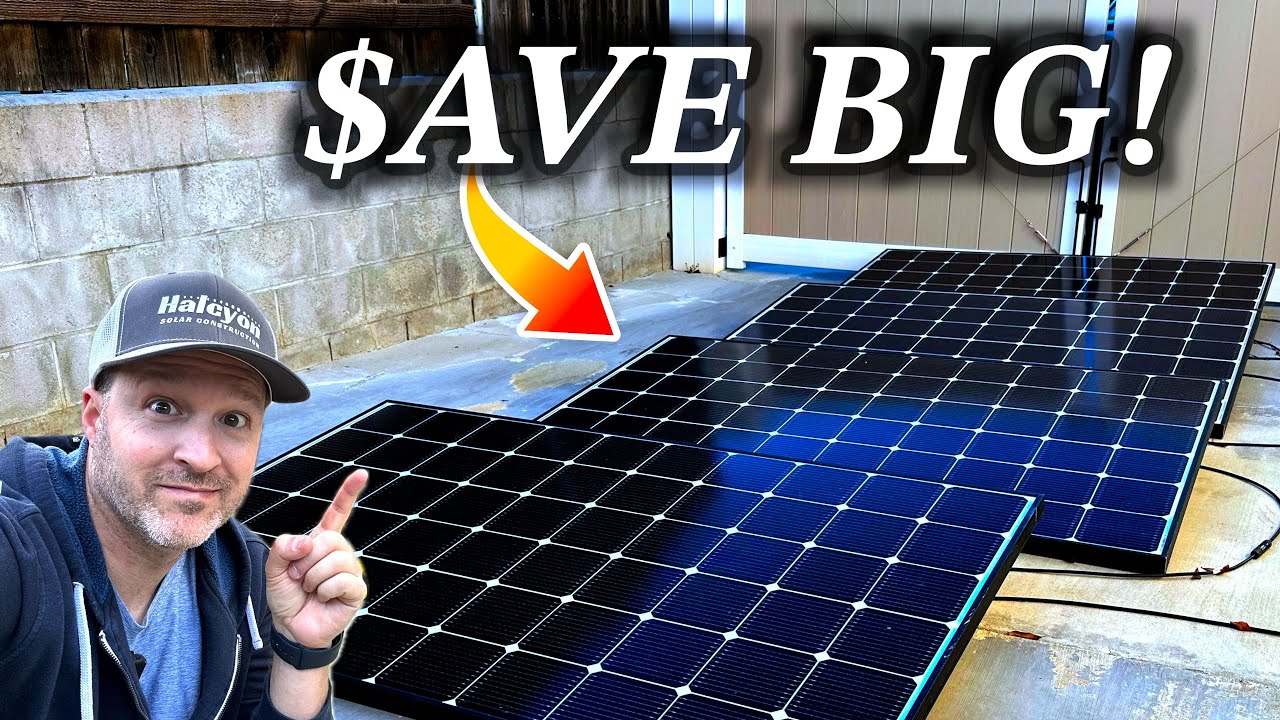
buying new solar panels is a great way to save money but you got to know what you're looking for I'm going to show you some of the things that you should look for when buying new solar panels also show you how to test them this is a great beginner course if you're new to solar panels so we'll go over what to look for when purchasing them and then we'll also go outside and test them that way you can know that they're functioning properly okay so these are going to be our test panels we have four of them that is an ecoflow 100 watt it's almost brand new it's only been used a few times this is an old school BP Solar not a mono but a poly crystalline this is a 200 wat bouar V which is a 9 BB9 busar and then we have a qale which I believe that's a 295 but we will double check and then we have a big by facial over there but we're not going to be doing any testing on that because it's brand new but you can get nice large big solar panels like this at huge discounted prices right now because the prices have really dropped when it comes to solar and I'll leave links down below if you just want to buy new stuff or I'll even leave a link on used certified stuff but again just looking on Craigslist and Facebook Marketplace you can find some really good deals if you know what to look for now once you found some solar panels you're interested in obviously it's easy to look at the condition just from the pictures and look at how they are treated are they clean are they sitting out in a field face up bunch of leaves on them and a bunch of dirt that right there is an indicator that maybe the owner doesn't really care too much about the product and he just wants them gone so sometimes those are just things to stay away from because leaving a panel face up unloaded not connected to anything can actually cause premature degradation to the panel so if it's just sitting there in the dirt for a couple years it can prematurely wear out now things to look for obviously are like things around frame just to see how it's treated you're also going to look at the face of the solar panel just to look for anything noticeable there are a lot of things that will will stand out now when looking at the solar panel you're going to look at the frame again and of course you're going to look at the face and you're also going to be wanting to look around the back sheet you also want to take a look at the back sheet to make sure it's nice and uniform and clean and make sure that it's not delaminating and I'll show you some examples now when looking at the face you're going to want to check for anything around these cells you're going to be looking for damag spots such as hot spots between the bus bars and all the connections between them they are usually identified pretty easy as maybe a little brown spot or either kind of a burn mark those are indicators that the cell got too hot and maybe it was a bad solder joint and more so that is an indicator that that panel is going to start failing and degradating even more so you're probably going to want to just stay away from it and much like hot spots also brown spots are really easy to identify because it is kind of like a brown rust looking color that is going to be around the cell of the solar panel so if you see brown that is going around the cell on the outer edges that means that moisture is getting in there and that cell is basically going to go away and degrate and not put out any power and so you're going to want to stay away from panels like that again you'll want to look all the way around the backing sheet just to look for any corrosion moisture mold and more now some things that are a little bit harder to identify as snail Trails is you can see here there is a trail going up and down this solar cell and so there are little burn marks in between all of these and this is basically cells that are going to go bad and not put out any power pretty soon and this one has a lot of problems as you can see all over the place so this is not good and this solar panel is already prematurely failing you'll also want to just look for micro cracks in the cells now all of this can take really just about a minute or so just to scan each solar panel it doesn't take long to look for brown spots hot spots um cracking in the cells the snail trails are easily identifiable and if you have any delamination that happens on the back with the back sheet coming off or if there's cracks on the back sheet that means moisture is going to get on the other side of the backing plate or this backing sheet and that is going to allow moisture to get onto the cells and that's just going to cause premature failure of it now that I've shown you what to look for on the front and the back of the solar panels we're going to go outside and test these now even though they all look good one of these does not work properly at all and I'm wondering if you happen to maybe guess which one it is it should be obvious but sometimes it isn't it can look perfectly fine and not work this one here just to give you an idea this was off of an old customer's house and was in absolutely poor condition just sitting outside because we actually had to take these off these were no longer allowed to be installed on certain residential places because these panels here actually had a real bad track record and they would actually burn up cause fires these were not good panels whatsoever so these were uninstalled and and now you can see we have a whole bunch of them just sitting there if you find any of those I wouldn't pay much for them at all if not anything um probably just stay away from the BP Solar okay so we have the four solar panel on the ground and what I'm going to do is show you how we're going to test the first one that one will take a minute or two to explain and then we're just going to move along each one quite a bit faster that way this doesn't take longer so we're going to start with a little ecoflow 100 watt over there now one of the things you will need is a voltmeter to test these this is going to show us our open circuit voltage so this is just one of the basic items you're going to need but it only gives us one piece of information now another piece of equipment that I've been using for the last few months has been this this is basically a solar panel multimeter with an onboard mppt this actually makes quick work for testing your solar panels and I found it actually works pretty darn good at first I was a little skeptical of it but you just don't want to go over your voltage limit of 60 volts as you can see on the specs it can do up to, 1600 Watts at 60 amps but if you go over your voltage you will fry it just like if you were using a solar charge controller so this runs about $100 or a couple others that are cheaper and more expensive so you can go either way I'll leave a link down below this is definitely something you always want to have on board but this is definitely making quick work of things and there is another option you can use now utilizing a power station is also a great way to be able to check the load on the panel because just because the open circuit looks good doesn't mean when you put it under a load it's going to work properly so anything from eof flow blue edti or more you can use a power or if you happen to have a battery with a solar charged controller like this victron one it can actually show you from Bluetooth how many watts are coming in from the panel once it's putting a load on it and then charging up your battery so that's another option and these can be really cheap getting a solar charge controller on Amazon or anywhere else is actually not too expensive nowadays depending on which type you want to buy okay so the first thing we need to do is take a look at the specs on this panel and what we want to look for is our open circuit voltage and if you look at the open circuit voltage right here get a little shot for you right there open circuit voltage on this panel is going to be about 20.3 volts and so we want to get something at least close to that now all you have to do is take the positive lead put it into the positive negative lead will go into the negative and then you can see over here here is our voltage at 18.8 and that is with the panel laying completely flat solar peak of Radiance is almost right about now about another hour from now for me anyway will be kind of the solar peak and you can see we have a nice clear day so this will definitely help get us the best numbers for our solar panel now again this only tells us one piece of information our open circuit voltage looks good but what happens if you put a load on it okay so now what I did is I plugged it in into the power station and with power stations or your solar charge controllers just like the little meter I showed you earlier you can utilize power stations all the time for this stuff as long as you don't go over the open circuit voltage this can handle up to 60 volts so if your meter reads about 55 and you want to test it real quick you can because the voltage will drop after that um under these conditions because you are monitoring it right now it's really hard to see anything out here because of the glare but you should be able to see about 83 Watts right there that's what we're getting out of this solar panel under a load and so this solar panel and otherwise would be good but now if you use this little multimeter here which is for solar panel checking check out the numbers we get here we can see our open circuit voltage at 18.72% the Eco flow we are getting 83 84 Watts out of this and it'll continue to run testing on this until you tell it to stop or you disconnect it but that's basically what you want to look for is getting something relatively close you're never going to get the full 100 Watts or the full 160 or 220 or whatever it is okay now the BP solar panel if you've been around solar for a while maybe you know what these are this is a stuff that I kind of grew up with before I went into the medical field for a while the these were the old school ones and they just simply plug into each other so this is uh you know kind of the things you don't see anymore as these older style connectors so if you know what these are let me know down in the comments down below okay now the BP Solar is 160 W and this has a open circuit voltage of 44.2 so we're going to see what that comes out to with this one and how many watts we get out of it and one thing I did forget to tell you is to look at the back of the junction boxes they should all be nice nice and clean and this one up here you can actually see is is not in great shape this is starting to really kind of burn out you can see little holes up there um pretty hard to see out here with all the glare and everything but make sure the junction box is not burned up um that is one other thing I forgot to tell you about okay so look at the open voltage there 37 let's go ahead and put a load on it real quick and see what we get so I'm trying not to Blind you here but and look at that 120 watts out of 100 60 so that's actually not that bad considering that this panel is an old poly and it's just kind of laying flat on the ground and it's totally heat soaked now because it's almost 90° out here kind of cooking and one more reading it looks like still about 12.6 so staying real consistent but overall you could say that this is technically a good panel still so now we're going to check out this cell okay and if we take a look at our open circuit voltage there 39.4 okay now that we're plugged in look at that 11 volts that is way down okay so now we put a load on it let's see what happens here 63.6 Watts out of almost a 300 watt panel so this panel is bad this one here is not providing even half of what it should be I did kind of give you a brief of what this panel looked like earlier and there's not really any physical damage to it and there isn't really anything visual that you can see from the front or the back of this panel now there are other ways to look for damage on panels by using thermal imaging or infrared and you can take a look here at this Imaging we can look for hot spots on the panel and you might even notice there is a little black spot that does happen to be on the panel we just tested that's actually a bug that just flew on there a minute ago and it's literally crawling around and if it doesn't move soon I'm assuming it might fry itself you can see a little hot spotting going on up there where there is a little bit more of a cluster where the solar panel is hot up in this top corner and even if we look at the bger V where we saw all of those snail Trails that's also another section that seems to be hot where it's kind of clumped together on the one cell that had a lot of those snail Trails on it so that there is an indicator that that's where the problem is probably at okay last solar panel now this is the B RV we just looked at and if we look at our open circuit voltage here about 21.6 so this one has a higher amp than some of the other ones and again by looking at the junction box that all looks nice and clean all right as we look at our voltage here this one looks good 19.3 and about 140 Watts as it Cooks out here in the sun now honestly that's not that bad I tested this panel just about a few weeks ago and I was getting about 160 when it was and an ideal uh angle so we'll see if the angle changes what we're getting out of this so let me just lift it so right there hopefully you guys can see that that's 145 as I tilt it up 147 so as we get a more ideal angle we are getting better wattage out of it so there's 48 just to give you an idea if if you want to try to get Max so there's 150 so by tilting the panels and getting it more correctly oriented to the Sun is going to give you a better reading overall is this something you have to do not really if it's checking out pretty good just flat like that and under ideal conditions more than likely the panels are good and it only takes a second to test these especially with this new tester now I did do a review on that bouar V1 for more of the recreational use on RVs and such and it didn't do bad but there's just better panels out there and honestly with that one failing as much as it is I don't recommend that one so unfortunately the bouer v9 BB was not really that good of a panel compared to like the ragy and a couple other ones that are out there the Eco flow is a great panel but again I will leave links down below so you guys can find great deals on new panels and used panels but I hope this video helped you out that way now you know what to look for when buying used solar panels check out my other videos and I'll see you in the next one ...


No hay comentarios